We Are Not the First to Feel This: Epigenetics and the Ancestral Inheritance of Emotional Life
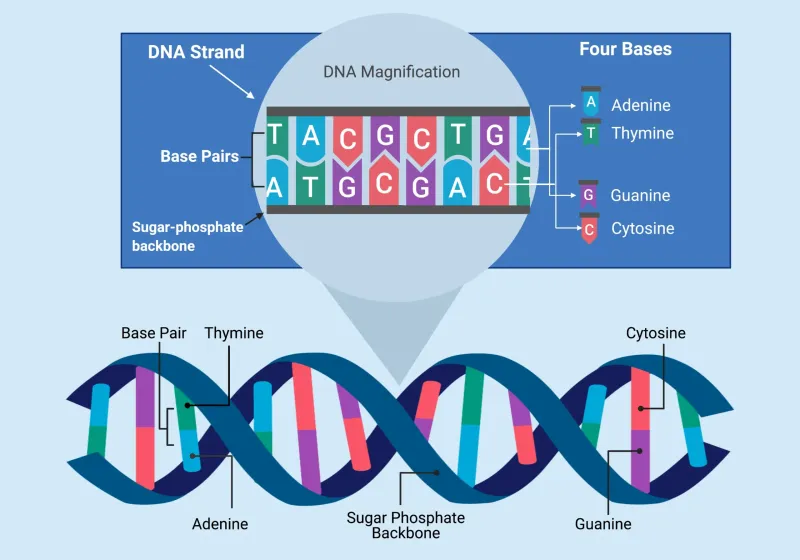
Photo: DNA helix soft light ancestral family generations abstract biology, via www.examsmeta.com
American culture has long been devoted to the mythology of the self-made individual—the person who rises from circumstances, transcends history, and authors their own destiny. It is a compelling story. It is also, according to a rapidly expanding body of biological research, incomplete in ways that matter profoundly. Because the self, it turns out, does not begin at birth. It may arrive carrying freight—emotional, physiological, even molecular—from generations it never lived through.
This is the unsettling and strangely consoling territory of epigenetics: the study of heritable changes in gene expression that occur without alteration to the underlying DNA sequence itself. And it is transforming how scientists, clinicians, and philosophers understand the relationship between personal suffering and collective history.
Beyond the Genome: What Epigenetics Actually Means
To understand epigenetics, it helps to first appreciate what it is not. It does not claim that traumatic experience rewrites the sequence of our DNA—the actual code of adenine, thymine, guanine, and cytosine that constitutes the human genome. Rather, it describes the chemical modifications—methyl groups, histone proteins, and other molecular markers—that attach to DNA and influence which genes are expressed, when, and to what degree.
Think of the genome as a vast musical score. Epigenetic markers are the annotations—the crescendos and rests, the instructions to play loudly or softly—that determine how the music actually sounds in a given body, at a given moment, under given conditions. And crucially, some of these annotations can be passed from parent to child.
The implications are significant. A person may carry, in the molecular architecture of their cells, the physiological echo of a grandparent's terror, a great-grandmother's grief, or the chronic stress of ancestors who survived famine, displacement, or violence. The body, it seems, keeps a longer record than any single lifetime.
The Science of Inherited Sorrow
Some of the most compelling early evidence for transgenerational epigenetic inheritance in humans comes from studies of communities shaped by historical trauma. Research conducted with descendants of Holocaust survivors has found measurable differences in cortisol regulation—a key hormonal marker of stress response—compared to control groups of similar demographic background. The children of survivors demonstrated altered expression of genes associated with the hypothalamic-pituitary-adrenal axis, the body's primary stress-response system, even when they had not themselves experienced extreme trauma.
Similar patterns have been observed in research examining descendants of those who endured the Dutch Hunger Winter of 1944–45, in studies of African American communities carrying the multigenerational physiological burden of slavery and structural racism, and in populations with documented histories of forced displacement and cultural erasure, including many Indigenous communities across North America.
Rachel Yehuda, a neuroscientist and traumatologist at the Icahn School of Medicine at Mount Sinai in New York, has been among the most prominent researchers in this field. Her work on Holocaust survivor families has demonstrated that epigenetic transmission of trauma-related biological signatures is not merely theoretical—it is measurable, reproducible, and clinically relevant. The suffering of one generation, her research suggests, does not simply end with that generation. It resonates forward.
The Individual as Archive
From a philosophical standpoint, these findings invite a fundamental reconsideration of selfhood. Western thought has tended to locate the individual at the center of experience—as a discrete, bounded subject who encounters the world fresh and forms responses based on personal history alone. Epigenetics complicates this picture considerably.
If we carry within our cells the imprint of experiences we never consciously had, then our anxiety, our grief, our difficulty trusting, our longing for safety may not be entirely our own in the sense we usually mean. They may be, in part, inherited orientations—biological postures shaped by the conditions our ancestors navigated. This does not diminish personal agency. But it does contextualize suffering in a way that is both scientifically accurate and, for many people, deeply humanizing.
To understand that the hypervigilance you have struggled to explain, the sorrow that seems to have no clear origin, or the visceral longing for belonging that has colored your adult life may carry ancestral dimensions is not to surrender responsibility. It is to extend compassion—to yourself, and backward through time to those who bore what they bore without the language to name it.
Healing as a Multigenerational Act
Here is where the science takes a turn that is genuinely hopeful, and where it begins to converge with wisdom traditions that have long insisted on the interconnectedness of personal and collective healing. Because epigenetic markers are not fixed. They are, in the language of biology, plastic—responsive to experience, environment, and practice.
A growing body of research suggests that contemplative practices—sustained meditation, mindfulness-based stress reduction, yoga, breathwork—produce measurable epigenetic changes. Studies have documented alterations in the expression of genes associated with inflammation, immune function, and stress response following as few as eight weeks of regular mindfulness practice. Telomere length, a biological marker of cellular aging often shortened by chronic stress, has been shown to stabilize or even lengthen in long-term meditators.
Equally significant is the emerging evidence around social connection and community engagement. Loneliness and chronic social isolation produce epigenetic signatures associated with inflammation and impaired immune function. Conversely, deep, sustained relational bonds—the kind cultivated in intentional communities, in therapeutic relationships, in spiritual practice groups—appear to activate gene expressions associated with resilience, repair, and what researchers sometimes call "flourishing."
The implications are striking. When we do the work of healing—through therapy, through meditation, through honest community, through the slow and difficult labor of processing inherited pain—we may not only be changing our own biology. We may be altering what we pass forward.
The Thread That Runs Through
There is something in this science that rhymes with what many traditions have always taught: that we are not isolated units of experience, sealed off from one another by the walls of the individual body. We are, rather, nodes in a vast network of relationship—temporal as well as spatial, reaching backward into ancestry and forward into legacy.
The grief encoded in your grandmother's silence. The vigilance your grandfather carried home from a war he never discussed. The unnamed longing that has moved through your family like a current beneath still water. These are not merely psychological inheritances, passed through story and behavior. They may be biological ones, written into the very instructions your cells follow each morning when they wake and go about the work of keeping you alive.
To take this seriously is to expand the circle of compassion—not only outward toward those around us, but inward, toward every generation that contributed to the particular, unrepeatable fact of our existence. We are, each of us, an ongoing conversation between the past and the possible. The question epigenetics now asks us to consider is: what do we wish to transmit?