Entangled: What Quantum Physics and Mirror Neurons Reveal About the Science of Feeling Each Other
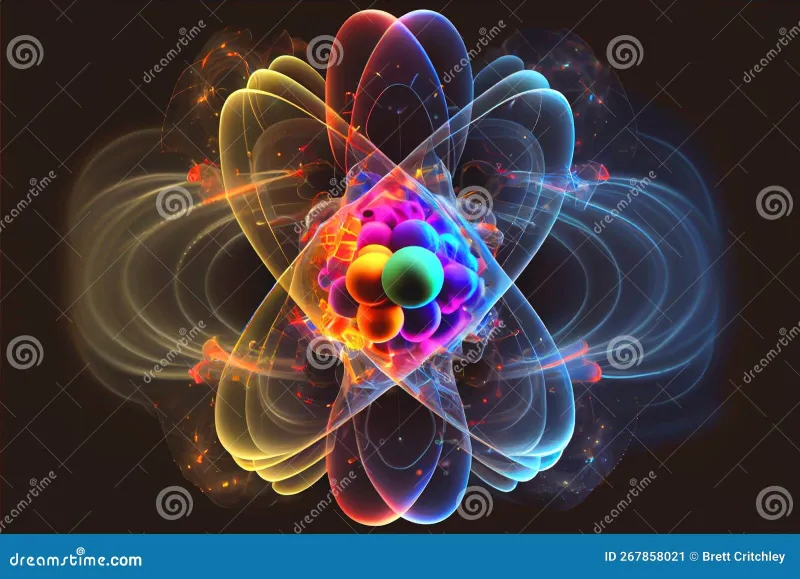
Photo: quantum physics particles glowing connection neural network brain abstract, via thumbs.dreamstime.com
In 1935, Albert Einstein dismissed a peculiar prediction of quantum mechanics as "spooky action at a distance" — a phrase he intended as a rebuke. What he could not have anticipated was that, nearly a century later, that spookiness would not only be confirmed by experimental physics but would begin to resonate, metaphorically and perhaps literally, with discoveries about how human beings feel one another's pain, joy, and sorrow from across a room.
Quantum entanglement and the neurological architecture of empathy occupy entirely different scientific disciplines. And yet, when placed side by side, they describe something hauntingly similar: a universe — and a mind — in which separation may be far less absolute than it appears.
What Entanglement Actually Means
To understand the parallel, it helps to be precise about what quantum entanglement is — and what it is not. When two particles become entangled, they enter a shared quantum state. Measuring a property of one particle — say, its spin — instantaneously determines the corresponding property of its partner, regardless of the physical distance between them. This is not a matter of hidden signals traveling between the two. Experiments pioneered by physicist John Bell in the 1960s, and confirmed with increasing rigor through the decades since, have ruled that out. The correlation is real, immediate, and non-local.
Physicists are careful to note that entanglement does not allow faster-than-light communication. It is not a telephone between particles. But it does suggest that, at the deepest level of physical reality, the notion of two truly separate, independent objects may be a convenient fiction — a useful approximation that breaks down under close inspection.
The universe, it turns out, prefers connection.
The Brain's Built-In Empathy Architecture
In the early 1990s, neuroscientist Giacomo Rizzolatti and his colleagues at the University of Parma made an accidental discovery that would reshape our understanding of the social brain. While studying motor neurons in macaque monkeys, they noticed something unexpected: certain neurons fired not only when a monkey performed an action, but also when it observed another individual performing the same action. These came to be known as mirror neurons.
Subsequent neuroimaging research in humans identified analogous systems distributed across the premotor cortex, the inferior parietal lobule, and the insula — a region deeply implicated in subjective emotional experience. When you watch someone recoil from physical pain, your insula activates in patterns that partially mirror the activation you would experience were the pain your own. You do not merely observe suffering; your brain, in a measurable sense, participates in it.
This is the neural substrate of empathy. And it operates across the gap between two nervous systems with a speed and intimacy that challenges our intuitive sense of where one person ends and another begins.
Reading the Parallel
The resonance between these two phenomena is, at minimum, a profound metaphor — and, for some researchers, potentially something more substantive.
Consider the structural similarity: in both cases, two systems that appear physically distinct share a state in a manner that transcends the space between them. The entangled particles do not exchange information through any known channel, yet their states are correlated. Two human beings sitting across from each other in a moment of genuine empathy do not merge their nervous systems, yet the emotional and physiological states of one are partially reproduced in the other — not through deliberate reasoning, but automatically, beneath the threshold of conscious intent.
Neuroscientist and author Daniel Siegel has written extensively about what he calls "interpersonal neurobiology" — the idea that the mind is not simply a product of the isolated brain, but emerges in the relational space between people. His framework, while grounded in conventional neuroscience, echoes the quantum principle that the boundaries we draw around systems may be more provisional than foundational.
Some theorists, including physicist Roger Penrose and anesthesiologist Stuart Hameroff, have proposed that quantum processes within neuronal microtubules may play a role in consciousness itself — the so-called Orchestrated Objective Reduction hypothesis. The theory remains deeply contested, and mainstream neuroscience has not embraced it. But it raises a question worth sitting with: if quantum coherence can be sustained in warm, wet biological systems like photosynthetic plants and bird navigation systems (both of which have shown evidence of quantum effects), might the brain be a more quantum-influenced organ than we have assumed?
The Implications for Shared Humanity
Whether or not quantum mechanics operates directly in the neural processes underlying empathy, the conceptual parallel carries genuine weight. Both phenomena point toward the same philosophical conclusion: that individuation — the experience of being a discrete, bounded self — may be a layer of reality rather than the whole of it.
This has practical consequences. Research consistently demonstrates that social isolation degrades physical health, that loneliness activates the same neural pathways as physical pain, and that perceived social connection measurably alters immune function, inflammatory markers, and cardiovascular outcomes. The body does not treat connection as a luxury. It treats disconnection as a threat.
If the mirror neuron system is evolution's way of encoding the truth that we are not fully separate from one another, then cruelty, indifference, and the cultivation of radical individualism are not merely moral failures — they are biological contradictions. They run against the grain of what the nervous system is designed to do.
Where Physics and Consciousness Converge
The philosopher David Bohm, one of the twentieth century's most original quantum theorists, proposed that beneath the "explicate order" of the world we observe — the world of separate objects and measurable distances — lies an "implicate order" in which everything is enfolded into everything else. Entanglement, in Bohm's view, was not a strange exception to the rules of physics. It was a glimpse of the deeper rule.
It is difficult not to hear in that framework something that contemplative traditions across cultures have been articulating for millennia: that the separateness we experience is real, but not ultimate. That beneath the surface of individual identity, something more continuous persists.
Neuroscience is not yet in a position to confirm that claim in its fullest sense. But it has confirmed that our brains are built, at a structural level, to resonate with one another — to be moved by what moves others, to register the inner states of those around us as something that concerns us directly, whether we choose it or not.
Quantum physics has confirmed that the particles composing our bodies were never as separate as they seemed.
Perhaps the most honest scientific statement available to us is also the most ancient spiritual one: we are, in ways that matter and in ways that are only beginning to be measured, entangled with each other. The boundary between self and other is real enough to navigate by — but too porous to take as the final word on what we are.
The universe built connection into its most fundamental laws. The brain built it into its most automatic responses. What we do with that knowledge — in our politics, our communities, our daily encounters with strangers — is, perhaps, the defining question of this particular moment in human history.