Heartbeat to Heartbeat: The Biological Architecture of Trust Built in a Parent's Arms
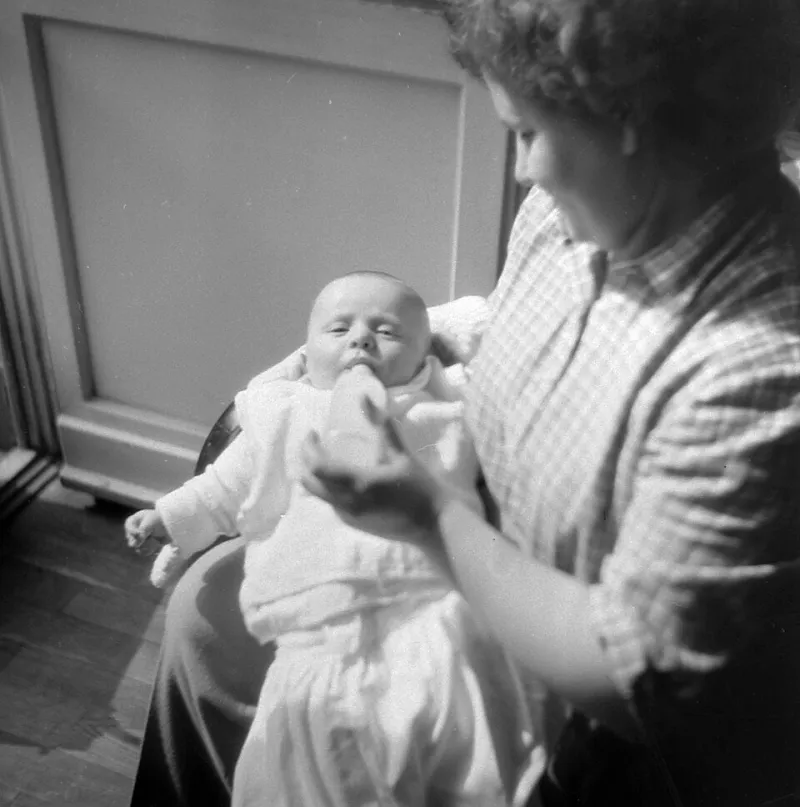
Photo: FOTO:Fortepan — ID 1556: Adományozó/Donor: Fortepan., CC BY-SA 3.0, via Wikimedia Commons
Long before an infant can speak a word, form a memory, or consciously register the face gazing down at them, something extraordinary is already underway. Two hearts — one large and seasoned, one small and newly beating — are learning to move in time with each other. This is not poetry. This is physiology. And according to a growing body of interdisciplinary research drawing from cardiology, developmental neuroscience, and attachment theory, this early rhythmic communion between caregiver and child may be among the most consequential biological events of an entire human life.
The Discovery of Cardiac Synchrony
For decades, attachment theory — pioneered by British psychiatrist John Bowlby and later expanded by American developmental psychologist Mary Ainsworth — offered a compelling psychological framework for understanding how the caregiver-infant bond shapes emotional development. What was missing, however, was a granular biological account of how that bond is transmitted at the level of the body itself.
Recent studies have begun to fill that gap. Researchers measuring heart rate variability (HRV) in mother-infant dyads have documented a phenomenon known as physiological or cardiac synchrony: a measurable alignment of autonomic rhythms between caregiver and child during moments of close physical contact, eye contact, and responsive interaction. In one landmark study conducted at Bar-Ilan University in Israel, electrocardiographic data from mothers and their three-month-old infants revealed that the two individuals' cardiac rhythms converged significantly during face-to-face engagement — and that the degree of this convergence predicted the quality of attachment assessed months later.
This is not mere correlation. The autonomic nervous system, which governs the heart's rhythmic output, is exquisitely sensitive to relational cues. When a caregiver is calm, present, and attuned, their regulated nervous system communicates safety to the infant's developing brain through a cascade of biological signals — breath, touch, vocal tone, and heartbeat among them. The infant's nervous system, still in its formative stages, quite literally takes its cues from the caregiver's body.
The Architecture Being Built
What makes cardiac synchrony so significant is not the phenomenon itself, but what it constructs. The infant brain is undergoing its most rapid period of structural development during the first years of life, with neural circuits governing emotion regulation, social cognition, and stress response being particularly sensitive to relational input.
The vagus nerve — that long, wandering highway of the parasympathetic nervous system — plays a central role here. Polyvagal theory, developed by neuroscientist Stephen Porges, proposes that the vagal system is fundamentally a social organ, calibrated through early relational experience to assess safety or threat in the environment. When a caregiver's regulated heartbeat and soothing presence consistently signal safety to an infant, the child's vagal tone — a measure of parasympathetic flexibility — is strengthened. Higher vagal tone is associated with better emotional regulation, greater social engagement, and more robust stress recovery across the lifespan.
In other words, the caregiver's heartbeat is not merely comforting in the moment. It is instructional. It is teaching the infant's nervous system what safety feels like, how relationships sound and feel, and what the body can expect from another human being.
When Synchrony Is Disrupted
The inverse of this process is equally telling. Research on the still-face paradigm — in which caregivers are instructed to suddenly become expressionless and unresponsive during interaction — demonstrates that even very young infants show immediate physiological distress when relational attunement is withdrawn. Heart rate accelerates. Cortisol levels rise. The infant's nervous system registers the absence of synchrony as a form of alarm.
For children raised in environments of chronic dysregulation — whether due to caregiver depression, unresolved trauma, poverty-related stress, or neglect — the cumulative effect of disrupted synchrony can leave lasting imprints on neural architecture. Studies of children raised in institutional settings with minimal caregiver contact have documented measurable differences in HRV, stress axis reactivity, and even the structural development of regions such as the prefrontal cortex and amygdala.
This is not cause for despair, but for informed compassion. These findings underscore why the conditions in which American families raise their children — access to parental leave, mental health support, economic stability, and community care — are not merely social policy questions. They are neuroscientific ones.
Resonance as a Relational Template
Perhaps the most profound implication of cardiac synchrony research is what it suggests about the nature of all subsequent human relationships. Attachment theorists have long argued that early bonds create internal working models — cognitive and emotional templates through which we interpret and navigate every relationship that follows. What the new cardiorespiratory research adds is a biological substrate for those templates.
The nervous system that learns, in infancy, to synchronize with another — to soften into the rhythm of a trusted presence — carries that capacity forward. It becomes the body's default orientation toward intimacy: an expectation, encoded in neural circuitry, that closeness is safe, that another's presence can regulate rather than dysregulate, that the space between two people can be a place of rest rather than vigilance.
Conversely, a nervous system that never learned reliable synchrony may approach closeness with a kind of hypervigilance — scanning for the moment the attunement will break, bracing against the vulnerability of being known.
Healing the Rhythm
Here, the science opens into something that feels almost like invitation. Because the adult nervous system, while less plastic than the infant's, retains the capacity for what researchers call earned security — the development of secure attachment through later corrective relational experiences. Therapists trained in somatic and relational modalities increasingly work directly with the body's rhythms: breath, movement, vocal tone, and the subtle physiological dance between two nervous systems in a room.
Practices such as heart rate coherence training, mindfulness-based stress reduction, and even certain forms of group breathwork have been shown to increase vagal tone and promote the kind of regulated, flexible autonomic functioning that was, ideally, first cultivated in a caregiver's arms. The body, it seems, can relearn the lesson — given the right conditions and the right relational presence.
The Deeper Meaning of Attunement
At Oneness, we are drawn to the moments where scientific discovery and ancient wisdom arrive at the same threshold. The idea that human beings are fundamentally relational creatures — that we are shaped, at the most basic biological level, by our rhythmic resonance with one another — is not new to contemplative traditions, Indigenous knowledge systems, or the lived wisdom of caregivers across cultures and centuries.
What is new is our ability to measure it. To watch two hearts on a monitor and observe them drawing toward each other like instruments finding a common key. To trace the path from that early synchrony through the architecture of the brain to the quality of a grown person's most intimate bonds.
The heartbeat, it turns out, is not merely a measure of life. It is a medium of transmission — carrying from one body to another the wordless message that is perhaps the most important any of us will ever receive: You are safe here. I am with you. We are in this together.
That message, encoded in rhythm before language exists to speak it, becomes the foundation upon which everything else — every friendship, every act of courage in love, every capacity for trust — is quietly built.